
Gilding Ceilings and Large Areas
How to gold leaf ceilings, walls, and broad architectural surfaces
Applying gold leaf to ceilings, walls, and other large-scale surfaces can create an extraordinary visual impact—elegant, luminous, and seamless when done correctly. While the process may seem daunting because of the size and location of the surface, a few simple guidelines will help you achieve a smooth, professionally finished gilt surface every time.
Large-area gilding often requires a different approach than smaller decorative elements. Consistency in adhesive application, proper planning, and efficient handling of the leaf are key to avoiding overlaps, holidays, wrinkles, and visible seams.
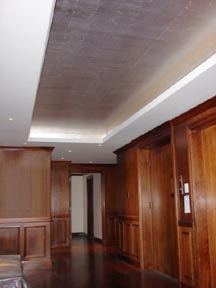
Path 1: Large Surface Coverage
Ribbon Leaf is ideally suited for large flat areas. It cuts production time dramatically while creating straighter, cleaner runs than sheet-by-sheet application.
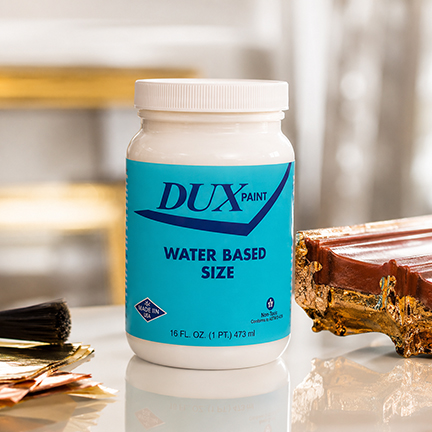
Path 2: Easy Adhesive Control
Water-based size such as Wunda Size or Aqua Size offers easy clean-up, smooth rolling, and a longer working window for overhead or large-wall applications.
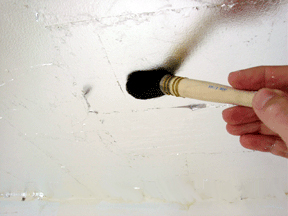
Path 3: Clean Professional Finish
Proper touch-up, gentle brushing, and controlled finishing help remove skewings, reduce flashing, and create a more uniform final appearance.
Why Use Ribbon Leaf?
Leaf on rolls—often called Ribbon Leaf—is one of the most efficient methods for gilding expansive surfaces. Instead of applying leaf sheet-by-sheet, you work with continuous lengths of metal leaf mounted to a lightweight roll. This allows you to cover wide areas quickly while maintaining straight, clean lines and minimizing visible joins.
Benefits of Ribbon Leaf for ceilings and walls: faster application, consistent overlap, better alignment on long architectural runs, reduced waste, easier handling in drafty or large spaces, and a more professional finish with less touch-up required.
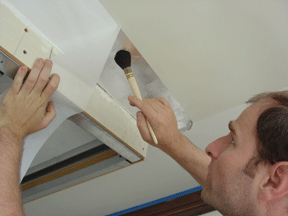
Step-by-Step Gilding Ceilings
Step 1: Prepare the Surface
The working surface should be as smooth as possible. Apply 2 coats of high-quality primer followed by 2 coats of finish paint. A Latex Eggshell finish will provide superior results, while the final base color depends on the visual tone required for the project.
Step 2: Apply the Adhesive Size
Using a water-based size such as Wunda Size or Aqua Size allows for easy application, easy clean-up, and extended tack time. Apply with a short nap roller, then soften and smooth with a high-quality brush while still wet.
Step 3: Let the Size Reach Tack
With water-based size, allow the surface to come to tack in approximately half an hour. Oil-based sizing varies depending on the size type, temperature, and humidity, so always work to the actual tack rather than the clock alone.
Step 4: Apply the Ribbon Leaf
Work with one long strip from end to end, or in shorter sections depending on the size of the area. It often helps to work with 2 people, one supporting the paper and the other positioning the leaf in place.
Step 5: Touch Up Holidays
A holiday is a missed or void area in the leafed surface. Scan the project while the size is still tacky and patch missing areas using retained pieces from the original application. If the size was missed entirely, that area will require additional adhesive.
Step 6: Finish and Seal
Use a soft hair Squirrel Mop brush to remove excess leaf and lightly polish the surface. If required, apply a solvent-based varnish such as Acrylic Topcoat Sealer using a short nap roller and soften it with a quality brush.
Adhesive Sizing
Apply the size with a short nap roller, then smooth it with a high-quality brush. Even adhesive coverage is critical when gilding overhead or working over broad surfaces.
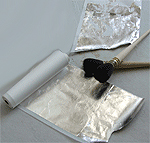
Ribbon Leaf Placement
Each roll comes as a continuous series of individual leaves laid back-to-back with a slight overlap. This makes long, straight runs much more manageable than loose leaf on large projects.
Final Cleaning
Once all gaps are filled, use a mop brush to dust away excess leaf. Be gentle while the adhesive is still soft, then return the next day to complete the final finish with soft cotton if needed.
Product Placement
Ribbon Leaf
For ceilings and large wall areas, Ribbon Leaf is the clearest product path. It improves control, speeds application, and creates more consistent seams across long runs.
Water Size
Water-based size gives you more working time and easier clean-up, which is especially useful when working overhead or across broad interior surfaces.
Mop Brush and Sealer
Keep a soft Squirrel Mop brush on hand for clean-up and consider Acrylic Topcoat Sealer when the project requires a protected final surface.
Professional Insight
Large-surface gilding is not just a scaled-up version of small detail work. The real difference is workflow. On ceilings and broad wall areas, the quality of the result depends on keeping the adhesive film even, controlling the alignment of the leaf, and working in a sequence that minimizes visible joins and dry spots. Ribbon Leaf is often the better choice because it simplifies those variables and turns a difficult application into a manageable system.
When the project is overhead or architectural in scale, handling efficiency matters just as much as material quality. The right size, the right brush, and the right format of leaf can save hours of labor while improving the finished appearance.