How to Do Traditional Water Gilding
Essential techniques, specialty kits, and professional instruction for mastering this historic craft.
Discover the ancient, time-honored method of applying gold leaf to complex, carved, and sculptural wood surfaces with unparalleled brilliance and refinement.
Traditional water gilding is a classical technique that relies on true gesso, finely prepared clay bole, and natural protein-based glues such as rabbit skin or gelatin glue. Gold leaf is laid onto the activated bole surface and then carefully burnished with polished agate tools, producing a luminous, mirror-like finish that cannot be achieved with modern adhesive methods.
This method allows for subtle contrasts between highly burnished highlights and soft matte passages, giving depth, warmth, and life to the gilded surface. Because the gold is bonded directly to the bole layer, the finish becomes an integral part of the object rather than a surface coating.
Traditional water gilding is considered one of the foundational gilding techniques from which many contemporary gilding processes evolved. It was the primary method used by master craftsmen of past centuries to create the gilded panels, frames, furniture, and architectural elements now preserved in museums and historic interiors around the world.
While water gilding requires patience, precision, and practice, it rewards the gilder with unmatched control, durability, and visual richness—making it a cornerstone skill for serious artisans, restorers, and conservators.
Traditional Water Gilding: Step-by-Step Overview
Traditional water gilding follows a classic workflow—gesso → bole → water → leaf → burnish—to create a brilliant, mirror-like gold finish on properly prepared surfaces.

1) - Build the Gesso Ground
Prepare the surface (typically wood) so it is stable, clean, and smooth. Apply multiple thin coats of true gesso (a traditional chalk-and-glue ground), allowing each coat to dry before adding the next. Once fully dry, sand and refine the gesso to achieve a smooth, even foundation—this is the “body” that supports the bole and leaf.
2) Apply Clay Bole
Brush on several thin coats of clay bole (often red, yellow, or black) over the prepared gesso. Bole adds warmth and depth beneath the gold, and it is the layer that ultimately allows the surface to be burnished to high gloss. After drying, gently smooth and polish the bole so it is uniform and refined. A Horse Hair cloth works well for this step.
3) Activate with Bole with Gilding Liquor
Traditional water gilding uses moisture to activate the bole layer. Apply gilding liquor (often water with a small amount of Rabbit skin glue (or Gelatin glue) and a small amount of alcohol (depending on technique) to a manageable area. The goal is to re-wet the bole evenly so it becomes receptive to the leaf, without over-saturating the surface.
4) Lay the Gold Leaf
While the bole is properly activated, use a Gilder's Tip brush and gently lay loose leaf genuine gold onto the wetted area. Work in sections, overlapping slightly to ensure complete coverage. After the leaf has set, allow it to dry thoroughly before moving on to finishing steps. Once dry, lightly remove skewings and excess leaf with a soft brush or cloth.
5) Burnish to a Mirror Shine
When the gilding is fully dry, burnish selected areas using a polished agate burnisher. Burnishing compresses and polishes the gold, creating a high-gloss, reflective finish. You can choose to burnish only highlights and leave other areas matte for classic contrast and depth.
Tip: Water gilding is all about surface preparation and timing. Thin, even layers and controlled moisture produce the cleanest leaf lay and the brightest burnish.
Traditional Water Gilding - online ZOOM Class
Tradional Water Gilding Classes! - Professional training from Master Gilder Charles Douglas. Vist our course listing for more information.
Be guided through each step of this beautiful, ancient method of gold leaf gilding for use on such objects as picture frames, furniture, and architectural detail. Students will learn Online to prepare rabbit skin glue, traditional gesso, and clay bole grounds followed by laying and burnishing genuine 23 kt gold leaf and basic toning.
Water Gilding Tool Kit
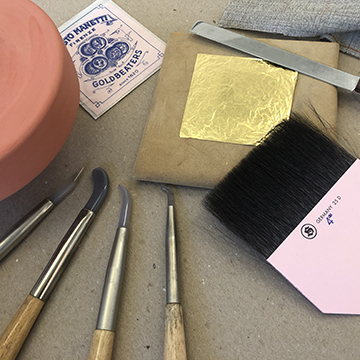
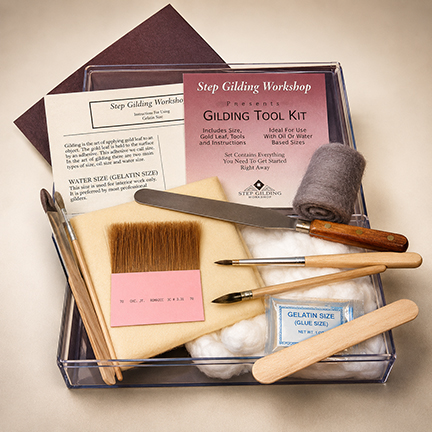
Water Gilding Tool Kit - Includes all the tools and materials to apply Genuine Gold Leaf in the Traditional Water Gilding Method. Basic Kit contains: Gilder's Pad (Plain 6" x 6" American W/O shield), Gilder's Mop, Agate Burnisher (SL5 - see catalog), 3 " Gilder's Tip brush, Gilder's Knife (Double edge with round tip 5 ½" blade), two 3/4" Brushes, Oil free steel wool, Vaseline Petroleum Jelly, Cotton, Stirrers, Wet/dry paper. Does not include Genuine Gold leaf.
| GW/TOOL
$ 223.00 Tradional Water GIlding Tool Kit |
Tool Kit |
Water Gilding Kit
Includes book or 22kt Genuine Gold leaf - Loose leaf
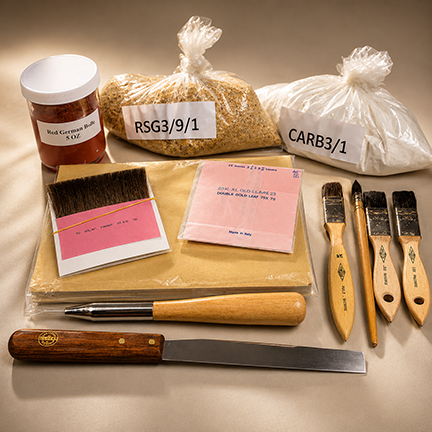
Includes all the tools and materials to apply Genuine Gold Leaf in the Traditional Water Gilding Method. Basic Kit contains: 22kt Genuine Gold leaf book - surface leaf, 90 grams Pebble Rabbit Skin Glue, 200 grams red gilder's clay, 200 grams yellow gilder's clay, 1 lb. French whiting for gesso, 600 grit wet/dry sandpaper, 4 wooden mixing sticks
| WGKIT
$ 308.00 Traditional Water Gilding Kit |
Tool Kit |
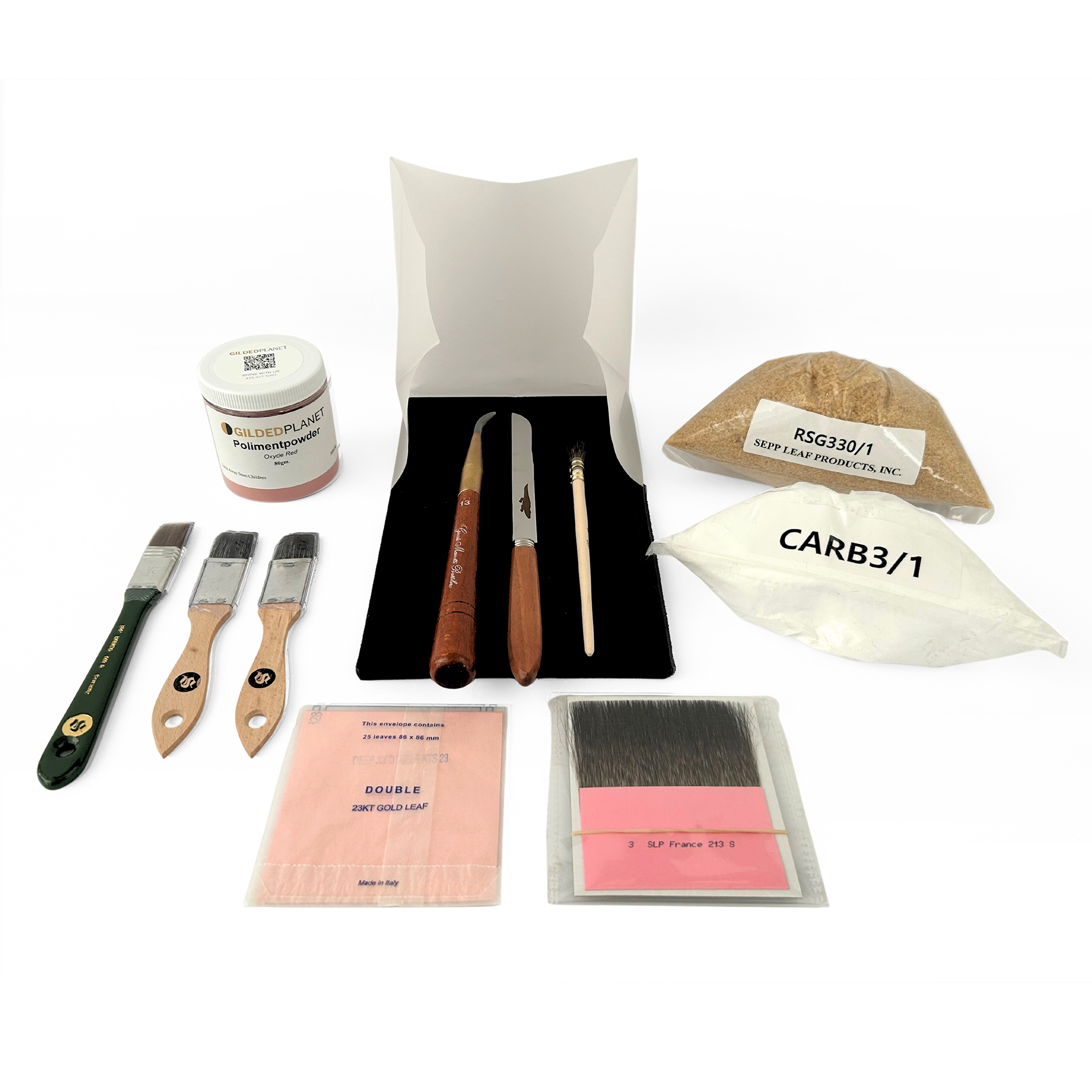
Charles Douglas Traditional Water Gilding class kit
Professional quality materials selected to accompany the Charles Douglas professional gilding class programs.
Water Gilding Tool Kit - Includes all the tools and materials to apply Genuine Gold Leaf in the Traditional Water Gilding Method.
GILDER’S KIT FOR “WATER GILDING” CLASSES by Charles Douglas.
KIT TO INCLUDE THE FOLLOWING ITEMS
- 213K/3.5 - 3 1/2" Kolinsky Gilder's tip brush.
- MA13 - Agate Burnisher
- 61/2 - Mop Brush - 2 inch
- 625/1 - Mop Brush - 1 inch *** (TWO BRUSHES) **
- GK/S - Gilder's Knife - Single edge.
- GP/D -Gilder's Pad - 6 inch
- CARB3/1 - Whiting
- RSG330/1 - Farmer's Glue - Rabbit Skin Glue
- 3355P - 5oz Jar Red Bole Clay - WET
- MA23.00DB/B - 23KT Double Gold Leaf Book. Loose leaf. 25 lvs.
| CDWG/KIT
$ 520.00 Charles Douglas Classes - Tradional Water Gilding Tool Kit |
Water Gilding Tool Kit |