
Glass Gilding
Reverse gilding on glass, Verre Églomisé, and the material path for brilliant gold and silver finishes
Glass gilding is one of the most distinctive and beautiful forms of gilding. Applied in reverse and viewed through the front of the glass, it produces a luminous, jewel-like finish used for sign making, lettering, mirror work, decorative panels, furniture details, and Verre Églomisé. Unlike standard surface gilding, glass gilding depends on a very specific material system: a perfectly clean glass surface, gelatin size, carefully handled leaf, and a proper back-up layer to protect and visually support the metal.
This page is designed to help you understand that system before you begin. GildedPlanet’s glass gilding guidance centers on reverse gilding using Gelatin Size, applied wet to the glass so genuine gold or silver leaf can be laid immediately into the adhesive film. The result is a strong, brilliant bond with no visible discoloration when viewed through the glass.
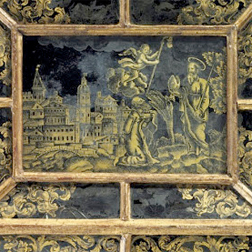
Path 1: Sign and Lettering Work
Best for reverse-gilded signage, storefront windows, lettering specialists, and decorative commercial glass work where brilliance, clarity, and clean handling are critical.
This path relies on very clean glass, wet gelatin size, and genuine gold or silver leaf applied while the surface is still flooded with adhesive.
Path 2: Verre Églomisé
Best for furniture, specialty mirror makers, decorative panels, and old-world reverse glass work where the finish is both ornamental and highly refined.
GildedPlanet describes Verre Églomisé as an old-world technique using the same core glass-gilding logic: correct materials, careful handling, and patience.
Path 3: Backed and Toned Glass Finishes
Best for projects where the reverse side of the gilding will be protected, painted over, or visually adjusted with a backing layer to change warmth, depth, or reflectivity.
Back-up paints and varnishes protect the gilt surface and can shift the visual tone of the metal when viewed through the glass.
What Makes Glass Gilding Different
Glass gilding is also known as reverse gilding on glass and Verre Églomisé. The technique has been used for centuries and was associated historically with sign making, decorative glass, and mirror work. In contrast to standard surface gilding, the leaf is applied to one side and viewed from the other, which means the adhesive layer must dry clear and the leaf itself must be laid cleanly without disturbing the flooded surface.
GildedPlanet specifically notes that patent leaf will not work for gilding on glass. Surface or loose leaf is required, and when using genuine gold, they offer a higher-grade “Glass Gold” selected for fewer pinholes and irregularities, making it better suited to reverse gilding.
Cleanliness
Glass must be perfectly clean before any gilding begins. GildedPlanet recommends denatured alcohol and a lint-free cloth as the starting point for proper preparation.
Wet Application
Gelatin size is applied wet and the leaf is laid immediately into the flooded adhesive surface. Timing matters because the leaf must be applied while the gelatin is still active.
Backing Color
Terracotta red can warm the gold, black can make it appear bolder and colder, and yellow can mellow the tone and add depth when the finish is viewed through the glass.
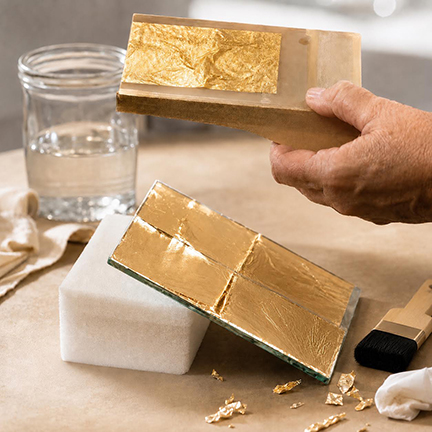
Core Material Decisions
Adhesive Size
Glass gilding uses Gelatin Size, dissolved in warm water and floated over the glass. GildedPlanet provides different gelatin proportions for genuine gold, silver, platinum, and palladium versus imitation gold, imitation silver, and copper leaf.
Leaf Format
Use surface or loose leaf only. GildedPlanet states that patent leaf will not work for glass gilding, and they recommend higher-quality “Glass Gold” when the goal is a cleaner reverse-gilded appearance.
Brushes and Handling
Specialty brushes are used both for applying gelatin size and for controlling the leaf. On vertical glass, a soft mop brush may be needed to hold the leaf in position while the size flows downward.
Application Technique
Step 1: Clean the glass surface
Ensure the glass is completely clean before beginning. Use denatured alcohol with a lint-free cloth to remove oils, dust, and residue. Any contamination will affect adhesion and clarity of the final finish.
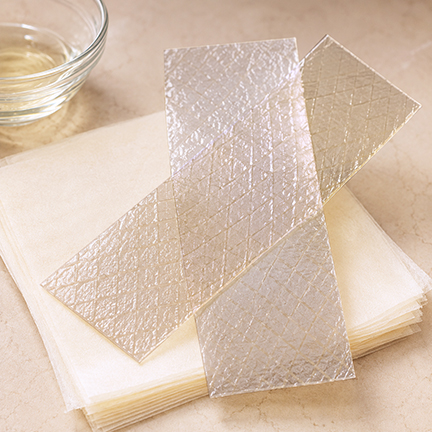
Step 2: Mix the gelatin size
The adhesive used for glass gilding is Gelatin Size. This water-based glue forms a clear bond when dry, making it ideal for reverse gilding.
Mixing ratios: Platinum white gelatin sheets are marked with 80 diamonds for measurement.
For genuine gold, silver, platinum, and palladium:
Use a two-diamond section (equal to one 00 gelatin capsule) dissolved in one half pint of distilled warm water to create a standard-strength size.
For imitation gold, imitation silver, and copper:
Use a four-diamond section (equal to two 00 gelatin capsules) in one half pint of distilled warm water for a stronger mix suited to metal leaf.
Step 3: Apply the gelatin size
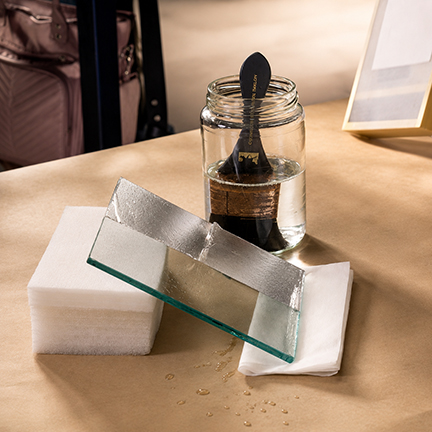
Apply the gelatin size evenly across the glass where the leaf will be placed. The surface should be fully flooded, not brushed thin. Specialty gilding brushes help control flow and coverage for this step.
Step 4: Apply the leaf
Use genuine gold or silver loose (surface) leaf only—patent leaf will not work for glass gilding. Typically, 22kt or higher gold is used depending on the desired tone. See Gold Leaf Color Charts for options.
The leaf must be applied while the gelatin size is still wet. Flood the surface, then use a gilder’s tip brush to transfer the leaf. As the leaf approaches the surface, it will naturally pull into place.
On vertical surfaces, the size will flow downward, so a soft mop brush may be needed to gently hold the leaf in position. Reapply size as needed and continue overlapping sheets to fully cover the area.
Step 5: Allow the size to dry
Allow the gelatin size to dry completely. Once dry, remove excess leaf and loose fragments using a soft squirrel mop brush to clean and refine the surface.
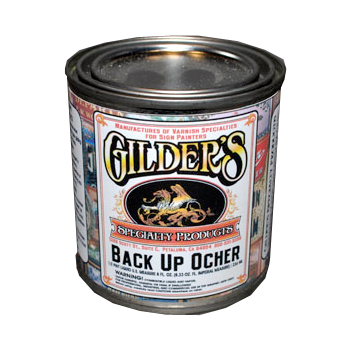
Step 6: Back up the gilt surface
Protect and enhance the gilding by applying Gilder’s Back-up Paint or Back-up Varnish to the reverse side.
The backing layer both seals the leaf and influences how it appears through the glass:
- Terracotta red warms the gold
- Black creates a stronger, cooler contrast
- Yellow softens and deepens the tone
You may also use a clear back-up varnish alone if no color shift is desired. If paint is used, apply a final clear varnish layer over it for protection.
Need the Brightest Finish?
Choose genuine gold or silver leaf and work with the cleanest possible glass surface and a properly mixed gelatin size for maximum brilliance.
Need Fewer Pinholes?
Use higher-quality Glass Gold selected for cleaner reverse gilding when clarity and finish quality matter most.
Need a Warmer or Bolder Look?
Control the final look through the back-up layer. The backing color influences how the metal appears from the front of the glass.
Professional Insight
Glass gilding looks deceptively simple because the front of the finish appears so clean. In reality, it is one of the more exacting gilding methods because every decision is visible through the glass. Surface cleanliness, gelatin strength, leaf quality, and backing color all show up in the final result. That is why reverse gilding rewards discipline as much as artistry.
Viewed correctly, glass gilding is a system of clarity. The cleaner the substrate, the cleaner the bond. The better the leaf, the cleaner the reflection. The more deliberate the backing layer, the more convincing the final tone. The beauty is on the front—but the method is built entirely from the back. ([gildedplanet.com](https://www.gildedplanet.com/glassgilding.html))